
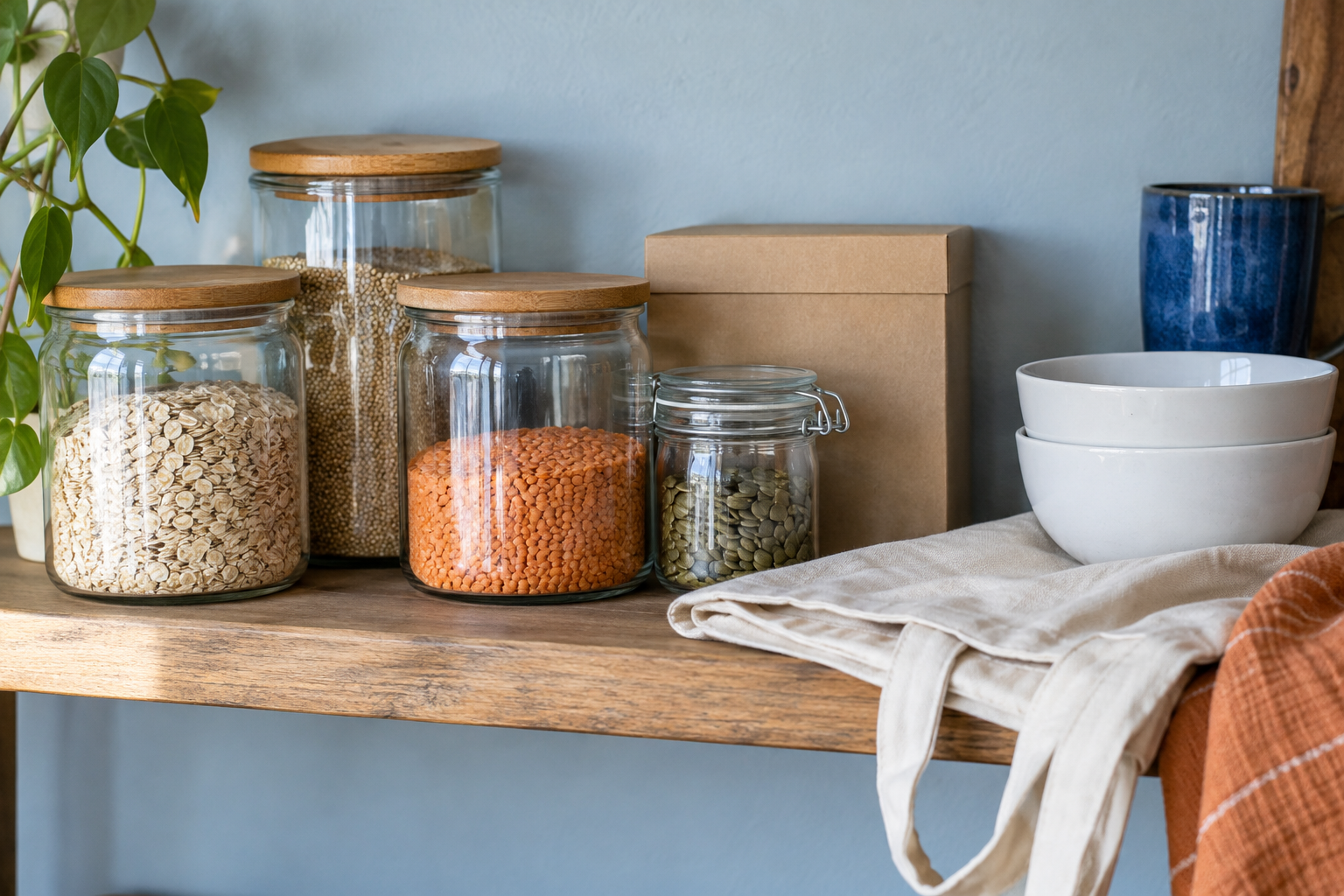
A shopping list made from memory tends to remember familiar purchases and forget half-used ingredients. Before writing what to buy, spend a few minutes looking at the places where food actually lives. You are looking for ingredients that can replace a purchase, complete a meal, or explain why another package would become clutter.
Check the pantry, refrigerator, and freezer separately. A brief look in each is more useful than reorganizing every shelf and running out of time before shopping. Bring food that needs attention into view without changing the storage conditions it requires. Read labels and follow official guidance for safety questions; an inventory exercise cannot establish that an uncertain food is safe.
Use three short notes: available, running low, and needed for a specific meal. “Available” prevents accidental duplicates. “Running low” is a reminder to check before the next trip, not an automatic instruction to buy immediately. The final group creates the real list. This distinction is helpful for products that seem nearly empty but still contain enough for the coming week.
Turn ingredients into fewer purchases
Suppose you find pasta, a sealed can of tomatoes, and lentils. You do not need to invent an ambitious challenge to empty the cupboard. You might simply remove pasta and tomatoes from the list, then plan a familiar meal around them. Buy only the ingredients that make that meal practical. The example is about using available food, not assuming every combination will suit every household.
Keep packages visible enough to check quantities. Decanting everything into matching containers can look tidy, but buying containers is unnecessary for this task. If you do transfer food, retain the relevant label information and use appropriate containers. A pencil note on an existing list can solve a duplicate-purchase problem more cheaply than a new organizing system.
Ask other household members about shared staples before leaving. An almost-empty jar may already have a replacement elsewhere, or someone may be taking the last portion for lunch. A shared note with simple quantities reduces that uncertainty. Avoid demanding perfect real-time updates: a system that is cumbersome will quickly become less reliable than a short conversation.
Keep the check small enough to repeat
Choose a few expensive or frequently duplicated ingredients for ongoing attention. If coffee, flour, and pasta keep accumulating, track those first. There is little reason to count every tea bag when the actual problem is buying a fourth bottle of oil.
After the trip, put new purchases where they can be found and update only the notes that matter. The useful result is not a photograph of a perfect pantry. It is a list that reflects the food already paid for, with fewer assumptions and a clearer reason for every new item.