
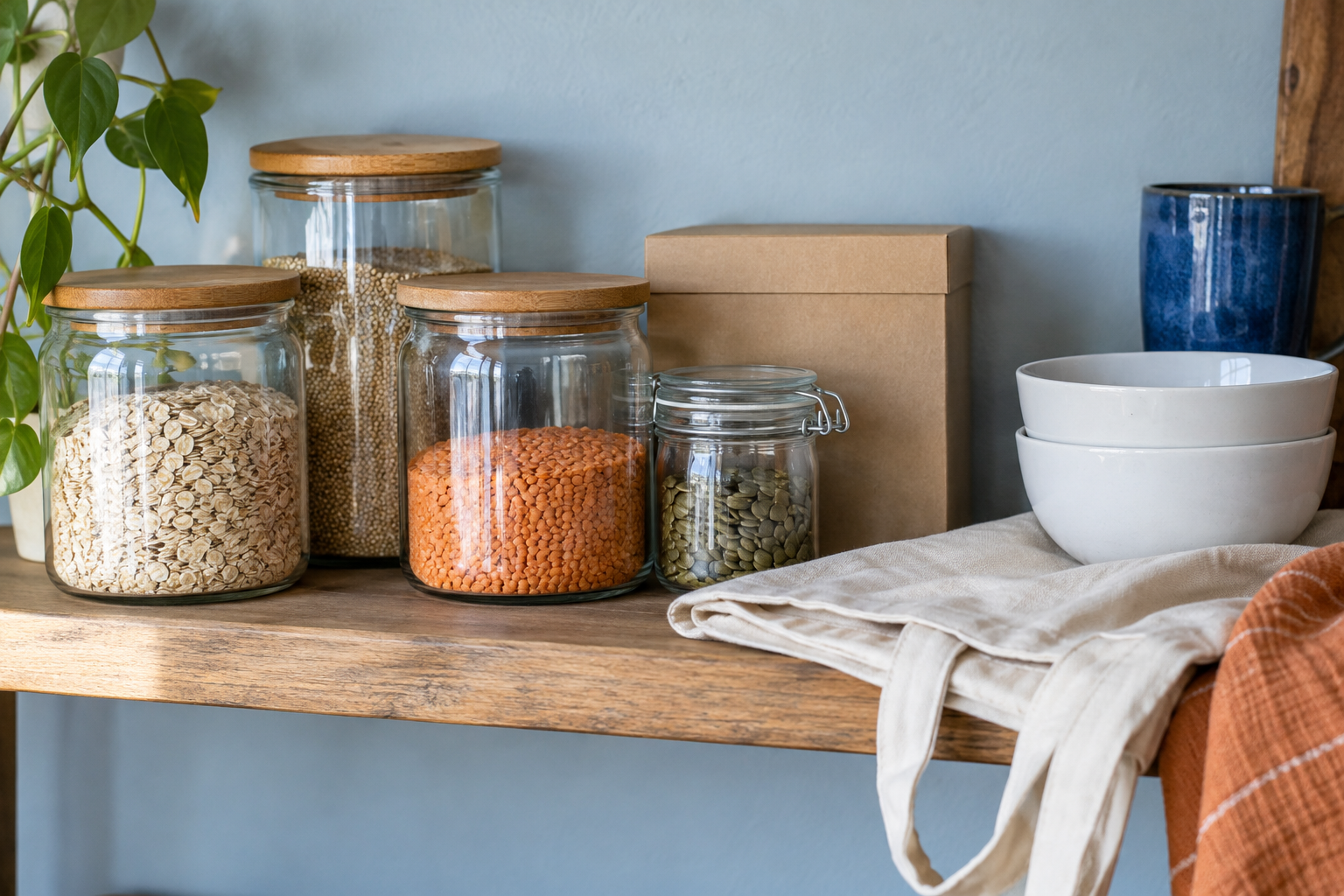
Bulk buying solves a particular problem: obtaining a quantity you already need at a useful price. It can create another problem when the discount becomes the reason for inventing future consumption. Before taking a large package home, estimate how long your household normally takes to use the smaller version. Use recent habits, not an optimistic plan to cook differently.
Compare the unit prices first, then compare the total payments. A larger pack can be cheaper per kilogram and still consume money needed for other groceries. There is no contradiction in choosing the smaller package when it keeps the whole basket workable. The relevant saving belongs to your household budget, not simply to one shelf label.
Count the usable amount
For an illustrative example, consider a small package costing 10 for one kilogram and a larger package costing 27 for three kilograms. The larger option costs 9 per kilogram. If you use only two kilograms, however, you have paid 13.50 for each kilogram actually used. These invented prices demonstrate the calculation; they are not market offers or a prediction of waste.
Now check where the package will go. A cupboard that already contains several open bags may not accommodate another large purchase well. Refrigerated or frozen food needs suitable capacity and the correct conditions throughout transport and storage. Follow the manufacturer's instructions and official food-safety guidance. Do not assume a bulk purchase becomes safe merely because you intend to freeze some of it.
Choose familiar products for any first experiment. A large bag of a staple you regularly finish is easier to assess than a new sauce whose flavour you have never tried. If the product changes how much you serve simply because there is more available, compare that new consumption with your original plan. Buying extra is not automatically economical when it also increases usage.
Share only when the arrangement is practical
Splitting an appropriate purchase with another household can reduce the quantity each person holds. Agree on payment, collection, and division before buying. Keep product information available to both households and maintain any required storage conditions. If dividing the package introduces awkward handling or uncertain timing, separate smaller purchases may be simpler.
After one purchase, note how much was used and whether the package created inconvenience. You need only enough evidence to decide whether to repeat it. A bulk habit should earn its place in your routine.
The strongest candidates have three features together: a meaningful unit-price advantage, dependable consumption, and suitable storage. If one is missing, wait or choose a smaller pack. A large discount printed on a large package cannot substitute for those practical conditions.